It’s been received wisdom for years that a weekly shop is the most economical and least wasteful way of shopping. I guess this is a symptom of out-of-town shopping centres and changing lifestyles. But I don’t think that’s the case for everyone. To reduce your waste I would encourage you to ask yourself the question ‘what kind of cook am I?’ and shop accordingly.
For me a weekly shop does not work. I am not a planner and I like to decide what to cook on the day I want to eat. Checking exactly what’s in my cupboards for that meal, then going out to the shops with my tote and buying specifically for that meal with a few extras to top up the cupboards, breakfast or snacks is the way we waste the least. Granted, I live close to a lot of shops which I know is not the case for everyone.
When I do an online shop, I stock up on tins, jars and some (non-refillable) cleaning products and household stuff, then I shop daily for each meal or each couple of meals. It means I am on top of what’s in my cupboards, in my fridge and I use what I buy; nothing gets forgotten about. This method may not work for you, though. So I’ve laid out the kind of cooks I most often come across here.
Having spent a lot of time teaching cooking, both in people’s homes all over the UK and the US, and observing how different people shop, cook and prep, I think that cooks generally fall into three camps: daily cooks, weekly planners and batch cooks. What kind of cook are you?
DAILY COOKS - those who decide what to cook day by day
How to waste less
- Do a monthly shop for long-life, storecupboard goods you know you will use.
- Before you do that monthly shop, do a quick audit (this might be the night before, if you are going to shop on your way home from work) of what’s in your cupboards and fridge.
- If your schedule permits, do a daily or every-other-day shop for fresh fruit, veg, dairy, bread etc.
- Buy loose fruit and veg so you are not left with leftovers from large packets.
- Store any leftovers in the freezer if you will not eat them within 2 days.
- Do a bi-monthly look at everything in your cupboard. If things need to be used up, move them to the front of the cupboard, then write a list of those things and stick it on the front of your cupboard so you can keep them in mind when you decide what to cook.
- I find limiting the amount I can buy to one tote bag’s-worth makes sure I do not keep adding extra things we don’t need.
WEEKLY PLANNERS - Those who love to plan or those who are unable to shop frequently
How to waste less
- Before you shop, do a good audit of what’s in your cupboards and fridge.
- Write a detailed shopping list based on recipes, with amounts that you can refer back to at the shops to make sure you don’t overbuy fresh food.
- Buy loose veg so you are not left with huge leftovers from large bags.
- Avoid being tempted by offers and 2-for-1 deals. If you waste the excess, it’s not a good deal; if you know you will use it or can adapt a recipe then go for it.
- Do not shop when you are hungry.
- If you shop once a week then it is key to make sure your food is stored carefully, suggestions below.
- Make sure you cook the food you buy. If plans change and you don’t cook, then double-cook the night after and freeze that meal. Or take into account what food may last until next week and shop accordingly the week after.
- Try to cook the things with a shorter life early in the week and the things which may last longer at the end.
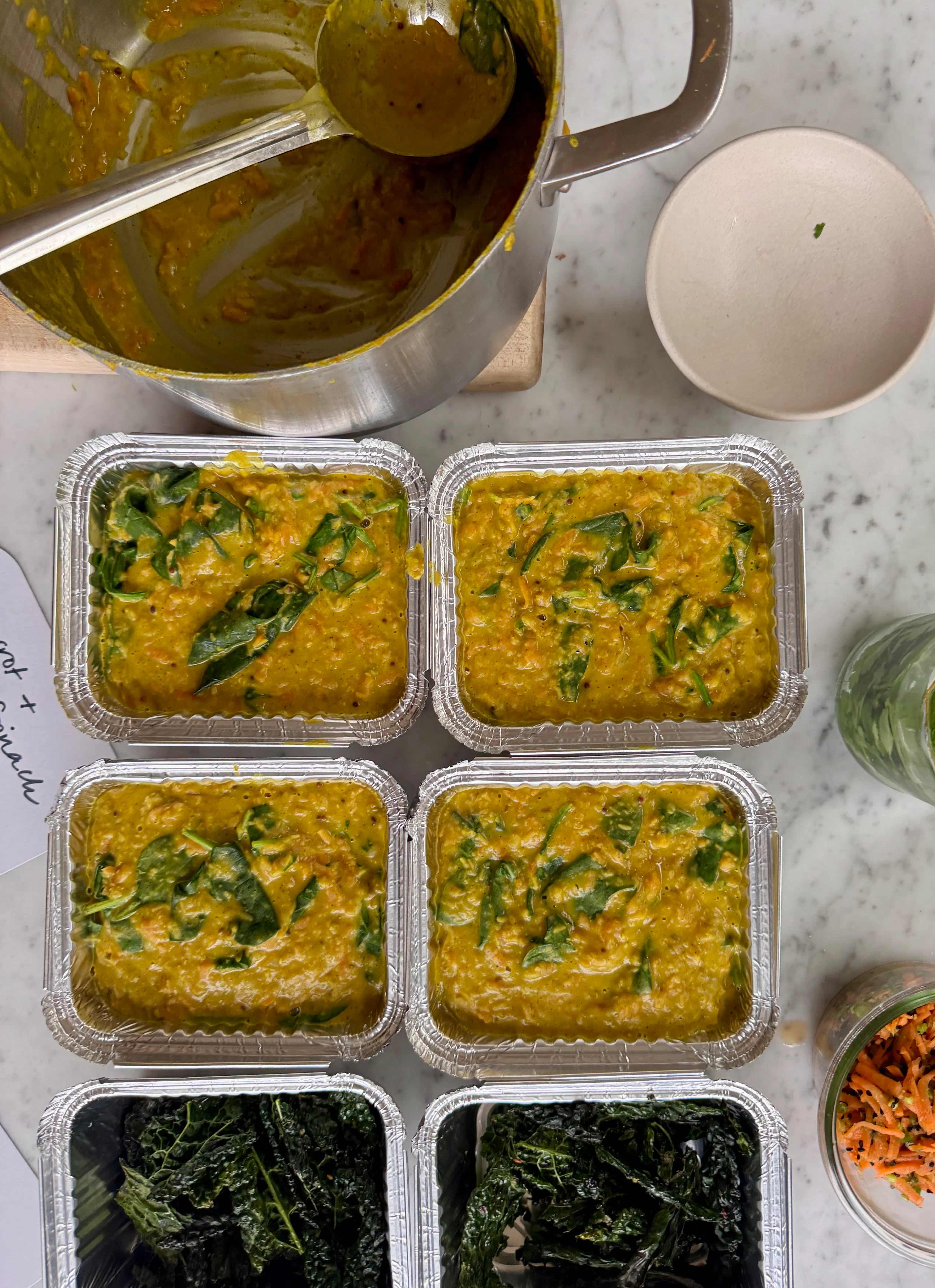
BATCH COOKS - Those who cook a couple of meals to last throughout the week
How to waste less
- Before you shop, do a quick audit of what’s in your cupboards and fridge.
- Plan out the number of meals you want to make and be sure you have containers to freeze any excess.
- Write a detailed shopping list and stick to it – how often you write it is down to you – see the notes above and below depending whether it’s weekly or daily.
- Don’t be tempted by offers and other things unless you know exactly how to use them or they can be cooked and stored in the freezer.
- Think about toppings – if you are eating the same things for a few meals, think about varying what you put on top (this can be a good way to use up leftover herbs, breadcrumbs, stray nuts and seeds etc).
- If you are unsure if you will eat leftovers, freeze them; don’t forget about them in the back of the fridge.
Sign up to my Newsletter
Sign up for my newsletter for joyful and inspiring recipes from me every week, as well as occasional takeovers from other brilliant chefs. I promise never to go overboard and you can unsubscribe at any time.